


The Journey of Stone Slabs from Quarry to Stunning Home Surfaces
- Liane Ganji
- Jun 11
- 3 min read

Stone slabs are a timeless choice for home surfaces, admired for their natural beauty and durability. But few people know the detailed journey these slabs take before they become the elegant countertops, floors, or walls in our homes. Understanding this process reveals the skill and care involved in transforming raw stone into a polished surface that enhances any living space.

Extracting Stone from the Quarry
The journey begins deep in the earth where natural stone deposits lie. Quarries are carefully selected based on the quality and type of stone available, such as granite, marble, or quartzite. Quarrying involves cutting large blocks of stone from the earth using specialized equipment like wire saws, diamond blades, and drills.
Workers first remove overburden, the soil and rock covering the stone. Then, they create precise cuts to separate massive blocks from the bedrock. These blocks can weigh several tons and require cranes and trucks to transport them safely to processing facilities.
This stage demands precision to avoid cracks or damage that could reduce the stone’s value. The quality of the extracted blocks sets the foundation for the final product’s appearance and strength.
Processing Stone Blocks into Slabs
Once at the processing plant, the large stone blocks undergo several steps to become slabs ready for home use. The first step is cutting the blocks into slabs of uniform thickness using gang saws or wire saws. These machines slice through the stone with diamond-tipped blades, producing slabs that can range from 2 to 4 centimeters thick.
After cutting, slabs are polished to bring out the stone’s natural colors and patterns. Polishing machines use abrasive pads to smooth the surface, enhancing the stone’s shine and making it easier to clean. Some slabs may also be honed for a matte finish, depending on design preferences.
During processing, slabs are inspected for flaws such as cracks or discoloration. Only the best slabs move forward to the next stage. Others may be cut into smaller pieces or used for different applications like tiles.
Customizing Slabs for Home Surfaces
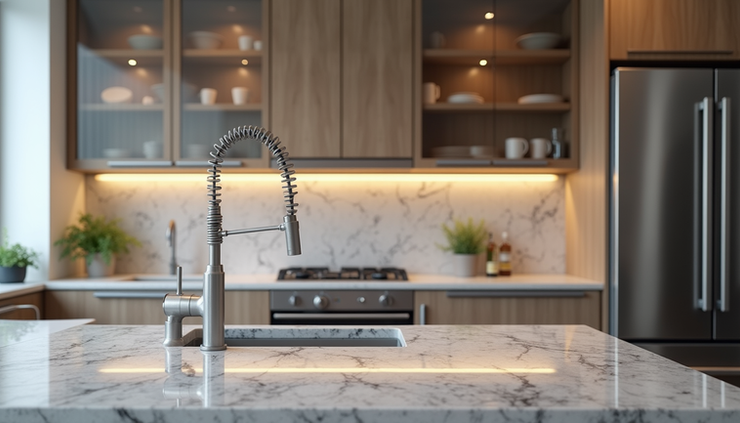
The final step involves customizing slabs to fit specific home designs. Fabricators measure and cut slabs to the exact dimensions needed for countertops, flooring, or wall cladding. This process often includes cutting holes for sinks or faucets and shaping edges with various profiles like beveled or bullnose.
Fabricators use waterjet cutters or CNC machines for precise cuts, ensuring a perfect fit. After cutting, slabs may receive additional treatments such as sealing to protect against stains and moisture.
Installation is the last phase, where slabs are carefully transported to the home and secured in place. Proper installation ensures the stone’s longevity and maintains its aesthetic appeal.

Examples of Stone Types and Their Uses
Different stones offer unique looks and benefits for home surfaces:
Granite: Known for its hardness and resistance to scratches, granite is ideal for kitchen countertops. Its speckled appearance adds texture and depth.
Marble: Valued for its elegant veining and smooth finish, marble suits bathrooms and decorative walls but requires more care due to its softness.
Quartzite: Combining durability and beauty, quartzite resists heat and stains, making it a practical choice for busy kitchens.
Soapstone: With a soft, matte finish and resistance to acids, soapstone works well in kitchens and laboratories.
Each stone type undergoes the same journey but requires tailored processing techniques to highlight its best features.
The Impact of Quality and Sustainability
The quality of stone slabs depends on every step from quarrying to installation. Choosing slabs from reputable sources ensures durability and beauty that lasts for decades. Sustainable quarrying practices also matter, as they reduce environmental impact by minimizing waste and restoring quarry sites.
Consumers can look for certifications or ask suppliers about their sourcing methods. Supporting sustainable stone production helps protect natural resources while enjoying the benefits of natural stone in homes.


Comments